Responsibility for the Environment
Giardini di Toscana believes in the power of Beauty, and for us, aesthetics is inseparable from social and environmental responsibility. It is not only what is produced that matters, but how it is produced, and, above all, with what consciousness. We believe that a perfume can be a cultural, artistic, and civic act.
We have chosen to embark on a path of environmental responsibility with the support of Etifor Società Benefit, aiming to contribute to a Climate Positive economy. In a sector where reducing greenhouse gas emissions is a priority, the company has adopted a scientific and structured approach to measure and minimize its environmental impact, while simultaneously protecting the forests of its territory.
Every production choice reflects a tangible commitment to environmental and social responsibility. Research, development, and manufacturing are 100% Italian; raw materials are carefully selected; packaging is essential—nothing is left to chance. Because the beauty of a perfume must be in harmony with the world in which it is born. We are dedicated to creating fragrances that delight the senses while seeking the best environmental solutions, ensuring that our perfumery art contributes to a greener, more responsible future.
Furthermore, we are committed to maintaining a short supply chain and upholding ethical and moral values. This commitment is reflected in the selection of high-quality raw materials and local production, whenever possible entrusted to artisans and SMEs, guaranteeing exclusive fragrances that respect both people and the environment.
Specifically:
Our fragrances are 100% Made in Italy
Product Research & Development is carried out in-house, under the guidance of the Nose and Creative Director, Silvia Martinelli;
The blending of the ingredients that make up the fragrances is assembled in Italy by a single long-standing partner;
Maceration and bottling are performed in Tuscany by two family-run laboratories;
Our supply chain is local and certified by
Istituto Per La Tutela Dei Produttori Italiani
By relying on suppliers often located within the same region, the company has obtained ISO 9001 certification, confirming the quality of its production process.
Bottle production is primarily entrusted to a historic Italian glassworks, using an electric furnace powered by up to 95% renewable energy and industrially recycled glass up to 52%;
Caps are crafted by Italian artisans from FSC-certified wood, sourced from responsibly managed forests;
Boxes are produced in Italy by small enterprises using 100% recyclable paper, 70% of which is recycled;
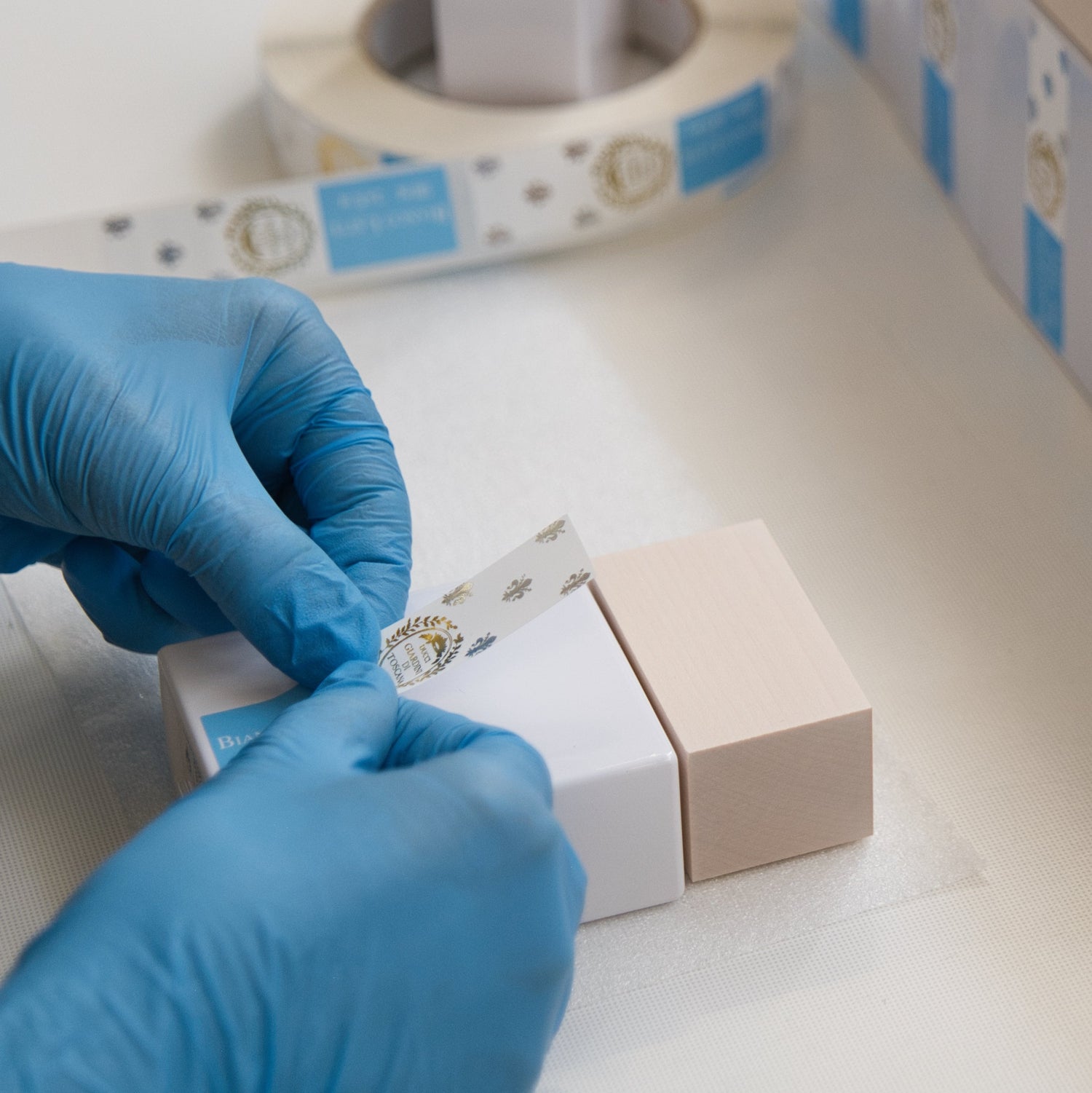
Labels are created by a small Tuscan company;
Giardini di Toscana is among the Founding Members of the first Renewable Energy Community of Casentino.
CERCasentino: https://cercasentino.org/.
Since 2023, together with Etifor Società Benefit, the company has been committed to annually calculating its Carbon Footprint, that is, the greenhouse gas emissions generated by its activities.
Quantifying and reporting these emissions allows the company to design concrete actions to reduce or offset them.
Today, 100% of these emissions have been offset through the purchase of Carbon Removal Credits from EDF Trading, supporting reforestation and afforestation projects certified by Verra.
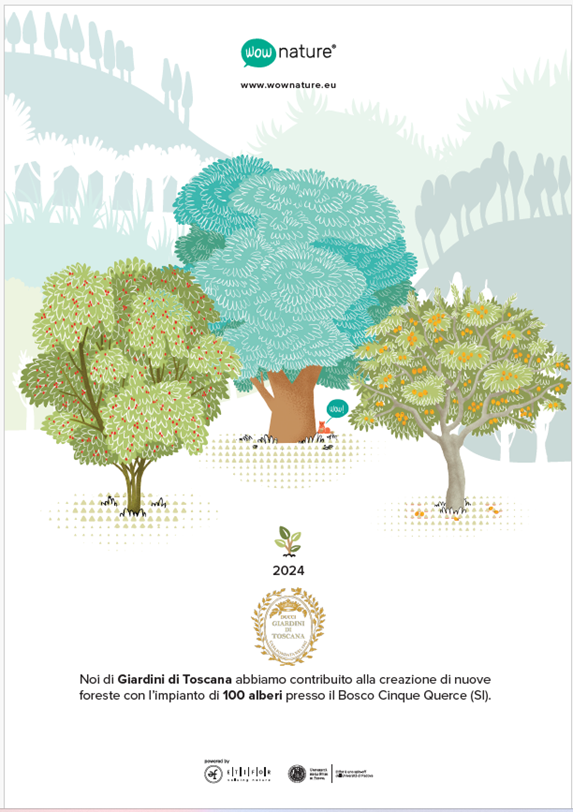
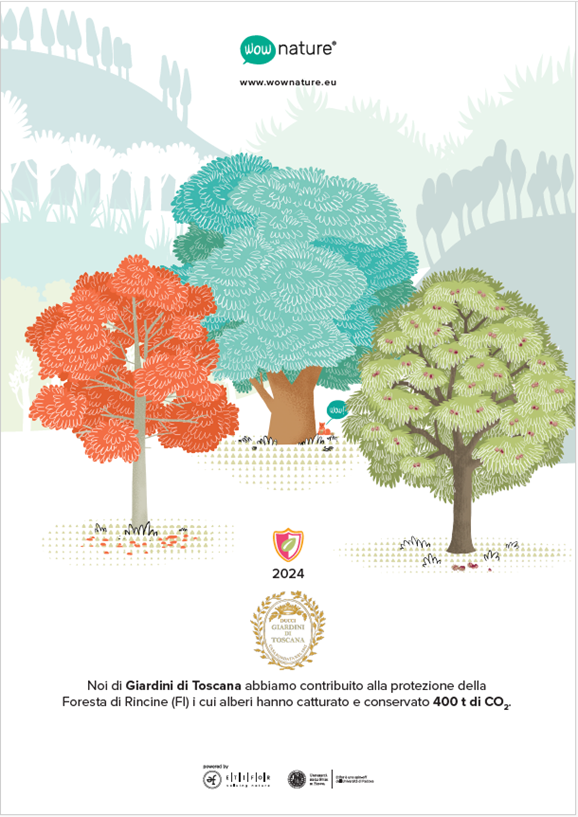
In 2024, the company also funded environmental development projects in Tuscany, resulting in the capture of a quantity of CO₂ exceeding 100% of its 2023 emissions.
-
Five Oaks Forest Project
Scopri di più -
Castor Forest Project
Learn More

Giardini di Toscana is actively committed to reducing the CO₂e emissions of its shipments by using sustainable aviation fuel. To this end, we have chosen DHL Express as our partner, sharing the commitment to sustainable choices. Our shipments travel with the DHL GoGreen Plus service.
In this way, we work to minimize the environmental impact of our logistics operations through the use of Sustainable Aviation Fuel (SAF), which, when blended with conventional jet fuel, can reduce CO₂e emissions by up to 80%*.
*Jet fuel based on CORSIA guidelines prescribed by SBTi. LCA SAF values are based on ICCT data, considering the full life-cycle emissions of used cooking oils and plant-derived vegetable oils.